Eva vets

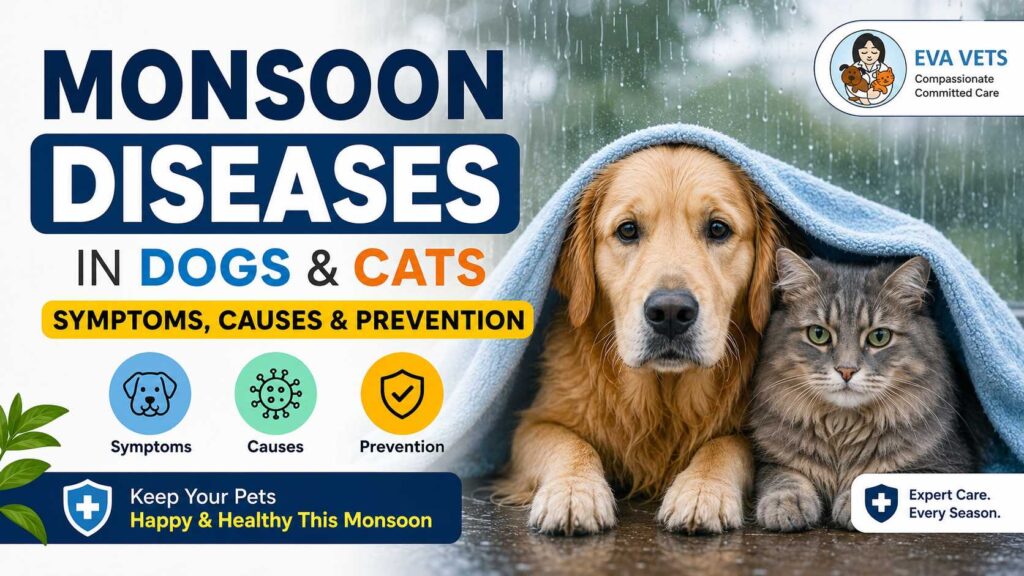
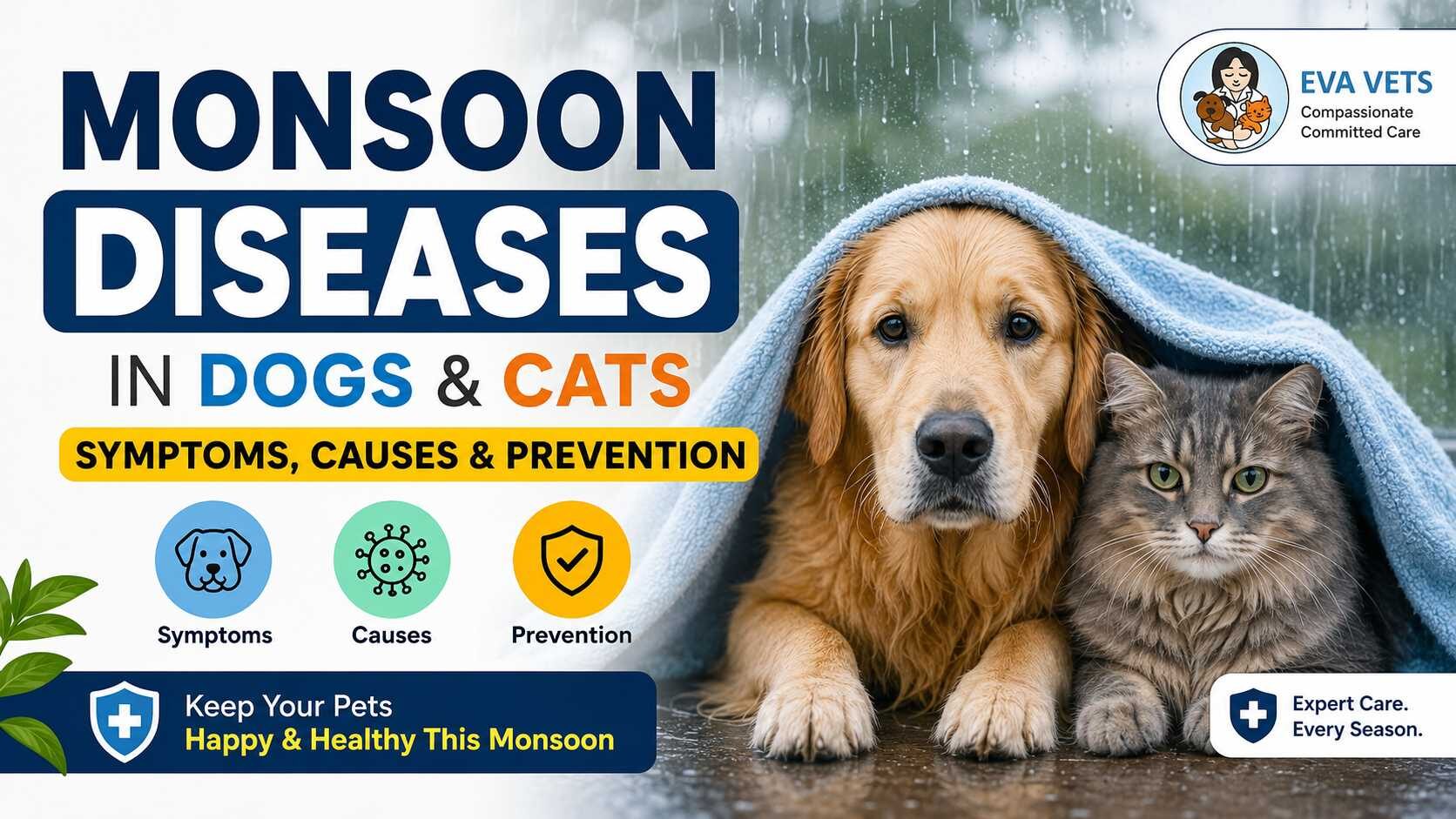
Monsoon Diseases in Dogs & Cats: Symptoms, Causes & Prevention

Monsoon Diseases in Dogs & Cats

The rain outside your window might feel refreshing, but for your furry family members, monsoon season brings a hidden set of health risks. In the hill regions of Uttarakhand, including Dehradun and Haridwar, heavy rainfall combined with high humidity creates conditions that are especially favourable for infections in pets. Every year, the veterinarians at Eva Vets — a trusted pet hospital in Dehradun — see a sharp rise in monsoon diseases in dogs & cats, from skin infections to serious illnesses like leptospirosis. As pet parents, understanding these risks early can mean the difference between a quick recovery and a medical emergency.

What Are the Most Common Monsoon Diseases in Dogs & Cats?

Monsoon diseases in dogs & cats are infections and illnesses caused by increased humidity, stagnant water, and parasite activity during the rainy season, including leptospirosis, skin infections, ear infections, tick-borne diseases, and gastrointestinal upset.

The most frequently diagnosed conditions include:

  • Leptospirosis – a bacterial infection spread through contaminated water and rodent urine
  • Fungal and bacterial skin infections (hot spots, dermatitis)
  • Ear infections, especially in floppy-eared dog breeds
  • Tick and flea infestations, which increase with humidity
  • Gastrointestinal infections causing vomiting and diarrhoea
  • Upper respiratory infections due to sudden temperature changes
  • Parvovirus and distemper flare-ups in unvaccinated puppies

Each of these conditions has different causes, but nearly all of them stem from the same root problem — excess moisture and reduced immunity. If your pet shows any of these signs, a timely pet consultation in Dehradun can help catch the problem before it worsens.

Symptoms at a Glance: Monsoon Diseases in Dogs & Cats

Use this quick-reference table to identify what you might be dealing with and how urgently it needs attention.

Disease/ConditionCommon SymptomsUrgency Level
LeptospirosisFever, lethargy, vomiting, jaundice, excessive thirstHigh – see a vet immediately
Skin infection (fungal/bacterial)Redness, hair loss, foul odour, scabs, itchingMedium – book an appointment within 1–2 days
Ear infectionHead shaking, scratching, dark discharge, smellMedium – treat before it worsens
Tick/flea infestationVisible parasites, red bumps, restlessnessMedium – treat promptly
Gastrointestinal infectionVomiting, diarrhoea, dehydration, dullnessHigh if symptoms last 24+ hours
Respiratory infectionCoughing, sneezing, nasal dischargeMedium – monitor closely

Why Do Monsoon Diseases in Dogs & Cats Increase During the Rainy Season?

Monsoon illnesses in pets rise mainly because damp fur, stagnant water, and humid conditions allow bacteria, fungi, and parasites to thrive, while sudden weather shifts weaken a pet’s natural immunity.

Key reasons rainy-season pet illnesses spike include:

  • Stagnant water collects bacteria, larvae, and parasites, especially in urban and semi-urban areas like Dehradun and Haridwar.
  • Damp fur and bedding create ideal conditions for fungal growth on the skin.
  • Weakened immunity — sudden weather shifts between heat and rain stress the body.
  • Increased mosquito and tick activity, which transmit vector-borne diseases.
  • Contaminated food and water sources during waterlogging, common in low-lying colonies during heavy Uttarakhand rains.

This is also a high-risk period for strays and rescued animals, who have far greater exposure to puddles, damp shelters, and contaminated street water. If you support or foster rescues, extra monsoon precautions are essential — our clinic partners with several local NGOs through our NGO Partnership Program to support stray animal care during this season.

What Are the Symptoms of Monsoon Diseases in Dogs & Cats?

Because so many conditions overlap, it’s important to know the specific warning signs:

  • Leptospirosis symptoms: fever, lethargy, loss of appetite, vomiting, yellowing of eyes/gums (jaundice), excessive thirst
  • Skin infection symptoms: redness, itching, hair loss, foul odour, scabs or hot spots
  • Ear infection symptoms: head shaking, scratching at ears, dark discharge, unpleasant smell
  • Tick/flea infestation symptoms: visible parasites, excessive scratching, red bumps, restlessness
  • Gastrointestinal infection symptoms: vomiting, diarrhoea (sometimes with blood), dehydration, dullness

If your pet shows any combination of these signs, don’t wait it out — early diagnosis significantly improves recovery outcomes. As one of the top pet hospitals in Dehradun, our team at Eva Vets offers complete diagnostic and treatment services for exactly these conditions, backed by an experienced veterinary doctor in Dehradun on call for urgent cases.

Is Leptospirosis Dangerous for Dogs?

Yes — leptospirosis is one of the most serious monsoon diseases in dogs and can affect humans too, making it a zoonotic disease of real public health concern. It spreads when pets walk through or drink contaminated puddles, especially where rodents are present — a common risk in older neighbourhoods and areas near the Dehradun and Haridwar canal systems during peak rainfall. Left untreated, it can lead to kidney and liver failure. According to the World Health Organization, leptospirosis outbreaks tend to rise during heavy rainfall and flooding, which makes monsoon prevention especially critical for pet parents in flood-prone regions.

The best protection is the leptospirosis vaccine, combined with avoiding stagnant water during walks. Speak to our veterinary doctors about pet vaccination in Dehradun and your pet’s current vaccine schedule, or explore our full range of veterinary services.

What Skin Infections Are Common in Pets During Monsoon?

Damp fur that doesn’t dry properly is the number one cause of monsoon skin infections in pets. Fungal infections (ringworm), bacterial dermatitis, and hot spots are extremely common, particularly in dogs with thick or long coats — a real concern given how often walks continue despite the rain in Dehradun’s hilly, tree-lined neighbourhoods. Cats, though more self-grooming, are also susceptible if they get wet during rain or stay in humid indoor spaces.

Prevention tips:

  • Towel-dry your pet thoroughly after every walk
  • Use a pet-safe antifungal shampoo if your vet recommends it
  • Keep bedding clean and completely dry
  • Avoid letting pets sit on damp surfaces for long periods

Our pet salon offers monsoon grooming services designed to keep coats clean, dry, and infection-free, and if an infection has already set in, our pet care hospital in Dehradun can prescribe the right treatment quickly.

How Can You Prevent Monsoon Diseases in Dogs & Cats?

Prevention is always more effective (and affordable) than treatment. Here’s a practical monsoon pet care checklist:

  • Vaccinate on schedule — especially leptospirosis and core vaccines
  • Deworm regularly, as parasite exposure increases in wet weather
  • Avoid stagnant water on walks and during outdoor play
  • Dry your pet immediately after rain exposure
  • Maintain a clean living area — disinfect bedding and floors weekly
  • Boost immunity with a balanced, vet-approved diet
  • Groom regularly to catch skin issues early
  • Use tick and flea prevention treatments as advised by your vet
  • Schedule a monsoon health checkup before the season peaks

If you’re unsure about your pet’s current food or supplement routine, our team can guide you — explore our veterinarian-approved pet food options. Preventive care is also one of the most affordable pet hospital in Dehradun options available, since routine checkups cost far less than treating an advanced infection.

When Should You Take Your Pet to the Vet?

Some symptoms require urgent attention rather than home care. Take your pet to a vet immediately if you notice:

  • Persistent vomiting or diarrhoea lasting more than 24 hours
  • Yellowing of eyes, gums, or skin
  • High fever or extreme lethargy
  • Refusal to eat or drink for more than a day
  • Sudden collapse or difficulty breathing

For pets showing these signs, don’t delay — reach out to our emergency veterinary services in Dehradun or Haridwar. As a best veterinary hospital in Dehradun for emergency and critical care, Eva Vets is equipped to handle everything from diagnostics to pet surgery in Dehradun, should your pet’s condition require it. Quick action during monsoon-related illness can be lifesaving, particularly for conditions like leptospirosis and severe gastrointestinal infections.

Book a Monsoon Health Checkup for Your Pet

Monsoon diseases in dogs & cats are largely preventable with the right awareness and timely care. A few simple habits — drying your pet after walks, staying current on vaccinations, avoiding stagnant water, and watching for early symptoms — can protect your companion through the rainy months.

Don’t wait for symptoms to worsen. Book a Monsoon Health Checkup with our experienced veterinary doctors in Dehradun or Haridwar today — a single visit can catch early signs of leptospirosis, skin infections, or parasite issues before they become serious. As a leading pet clinic in Dehradun and one of the region’s best animal hospitals in Dehradun, Eva Vets in Dehradun and Haridwar combines experienced doctors, modern diagnostics, and compassionate care under one roof. Contact Eva Vets now or call our emergency line for urgent concerns.

For more information on zoonotic and vector-borne diseases, you can also refer to resources from the National Centre for Disease Control, Government of India and the Department of Animal Husbandry & Dairying, Government of India.


Contact Us Today

Your pet’s well-being begins with the choices you make every day. A balanced diet, regular exercise, timely vaccinations, routine checkups, and prompt veterinary attention can all play an important role in helping your dog live a longer, healthier, and happier life.

Don’t wait until your dog shows signs of illness before seeking professional care. Book a routine wellness examination today and give your furry companion the preventive and comprehensive healthcare they need.

Eva Vets Dehradun
Near Shipra Vihar, Canal Road, Dehradun
📞 7409007999 / 7409117999 / 9193100911 (Emergency)
📧 evavetsdehradun@gmail.com

Eva Vets Haridwar
282A Govindpuri, Haridwar
📞 7409057999
📧 evavetsharidwar@gmail.com

Query Now

Scroll to Top