
Pet Health & Wellness
Common Signs Your Dog Is in Pain (And When to See a Vet Immediately)
Common Signs Your Dog Is in Pain (And When to See a Vet Immediately) Dogs can’t tell us in words when something hurts. They can only show us — through
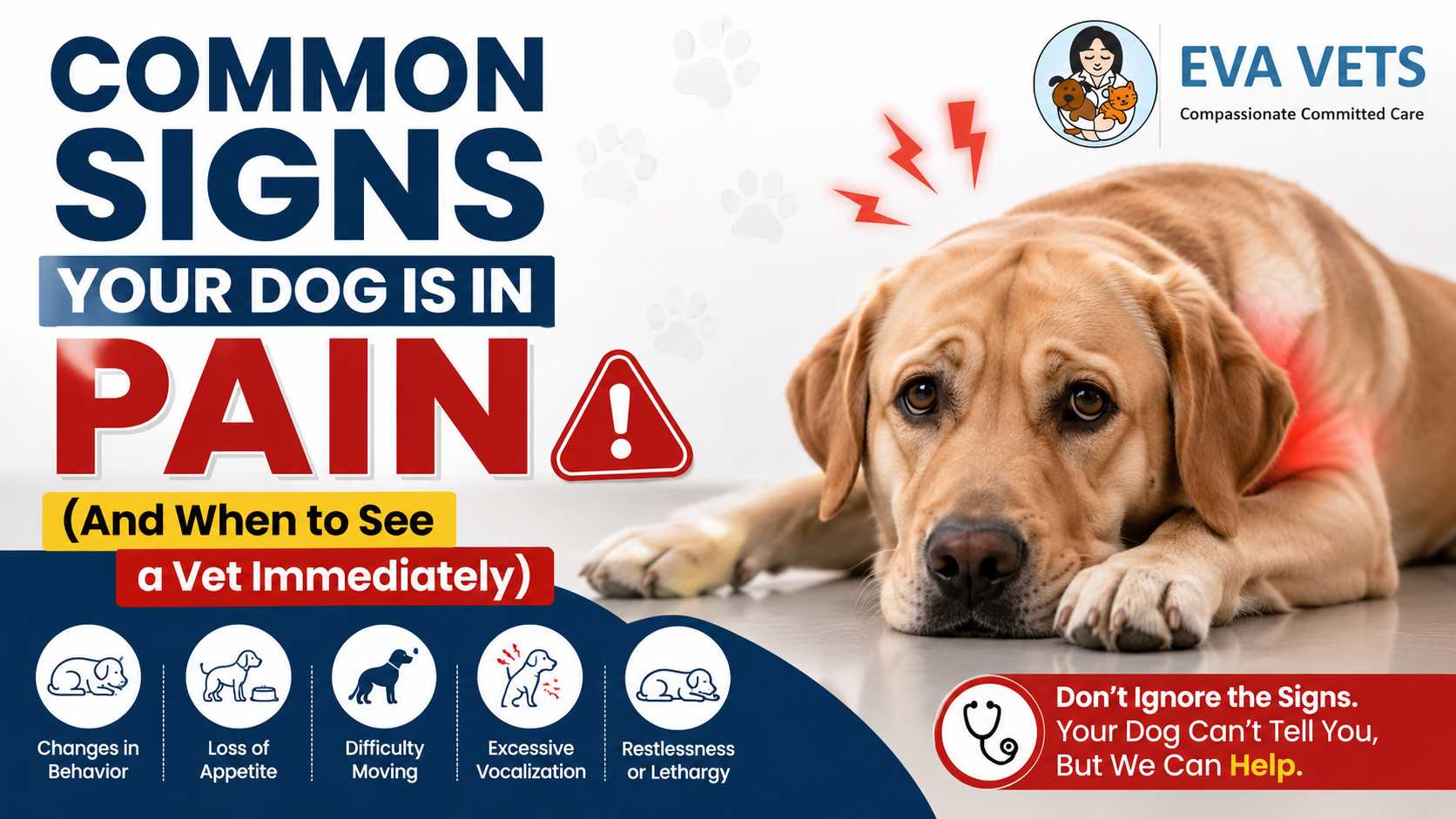
Dogs can’t tell us in words when something hurts. They can only show us — through small shifts in behavior, posture, appetite, or movement — that something isn’t right. As a pet parent, learning to read these signals early can make a real difference in how quickly your dog gets relief. At EVA VETS, we see many dogs brought in only after their pain has become severe, simply because the early warning signs were mistaken for “just getting older” or “having an off day.”
This guide answers the most common questions pet owners ask about recognizing pain in dogs, understanding why dogs hide discomfort, and knowing exactly when to take a dog to the vet for pain.
Dogs are instinctively wired to hide weakness. In the wild, an animal that appears injured becomes an easy target for predators or gets pushed out by its pack. That survival instinct hasn’t disappeared just because your dog sleeps on your couch. This is why so many hidden signs of pain in dogs go unnoticed until the discomfort becomes constant or severe. Recognizing this early is also part of responsible pet ownership, a principle emphasised by the Animal Welfare Board of India (AWBI), the statutory government body responsible for animal welfare laws in the country.
Understanding this helps explain a common question pet parents ask: do dogs hide their pain? Yes, often very well. A dog may still wag its tail, greet you at the door, or eat part of its meal while quietly dealing with real discomfort underneath. That’s why watching for subtle changes matters more than waiting for obvious crying or limping.
There isn’t one single symptom that confirms pain — instead, look for a pattern of changes from your dog’s normal behavior. Some of the most common signs of pain in dogs include:
If your dog is acting strange and seems uncomfortable for more than a day, it’s worth paying close attention rather than assuming it will pass on its own. For a broader look at day-to-day wellness beyond pain symptoms, our Dog Health Complete Guide covers everything pet parents need to know.
Behavior is often the first thing to shift before physical symptoms become obvious. A dog that is normally affectionate may become clingy when sick, seeking constant closeness for reassurance. Others do the opposite — becoming withdrawn, avoiding touch, or growling defensively when a sore area is approached.
Watch for:
These behavioral shifts are frequently mistaken for “mood changes,” but they’re often the body’s way of coping with discomfort.
Physical clues tend to appear alongside behavioral ones. Common physical signs include shaking or trembling, panting while resting (not just after exercise), a hunched or arched back, stiff muscles, and a lowered head posture. You might also notice your dog squinting, licking one area repeatedly, or guarding a body part when you try to touch it.
A swollen area, hot spot, or unusual posture — such as standing with legs tucked unnaturally — can also point toward localized pain that needs veterinary evaluation rather than home treatment.
Mobility changes are among the clearest signs of pain, especially in older dogs. Ask yourself:
Weakness in the back legs, dragging a limb, or sudden difficulty standing are especially important to note. If your dog suddenly cannot walk or seems to lose balance, this crosses from “watch and wait” into “seek care promptly.”
Yes — changes here are often overlooked but highly telling. A dog not eating because of pain, drinking noticeably more or less than usual, or straining to urinate or defecate may be dealing with internal discomfort rather than a simple upset stomach. Blood in urine, diarrhea paired with visible discomfort, or straining without results are signs that shouldn’t be brushed aside.
Accidents in the house from a previously house-trained dog can also indicate pain, particularly related to the joints, abdomen, or urinary system.
Dental pain is one of the most under-recognized causes of chronic discomfort in dogs. Look for bad breath, excessive drooling, dropping food while eating, chewing on one side, or pawing at the mouth. A swollen face, bleeding gums, or a visible broken tooth calls for prompt attention, since dental infections can spread and worsen quickly if left untreated. EVA VETS offers comprehensive dentistry and general treatment services to diagnose and manage oral pain in pets.
Arthritis and joint-related pain are especially common in aging dogs, though they can affect younger, active breeds too. Watch for stiffness after exercise, soreness after walks, reluctance to be touched in specific areas, or limping that isn’t accompanied by yelping. These signs often develop gradually, which is part of why senior dog arthritis symptoms are so easy to miss until mobility is noticeably affected. Diet also plays a supporting role in joint health — our nutrition guide for pets explains how the right food can ease strain on aging joints.
Abdominal pain deserves particular attention because it can indicate anything from mild digestive upset to a life-threatening emergency. Signs include a bloated or swollen belly, restlessness paired with an inability to get comfortable, repeated stretching (sometimes called the “prayer position“), vomiting with a firm stomach, or gagging without producing anything. These symptoms, especially when they appear suddenly, can point toward conditions like bloat, which require emergency care.
A reasonable question every pet parent asks: how long can a dog be in pain before it becomes serious? As a general guideline, if discomfort lasts more than 24–48 hours, keeps getting worse, or has no clear cause, it’s time for a professional evaluation. A dog in pain but still eating can be deceiving — appetite alone doesn’t rule out a real problem.
Book a vet visit if you notice:
If you notice any of these, book a consultation with our veterinary team rather than waiting to see if things improve on their own.
Some symptoms should never wait for a “let’s see how he does tomorrow” approach. Seek emergency veterinary care right away if your dog shows:
These are not symptoms to monitor at home — they require immediate professional intervention. Learn more about what qualifies as a pet emergency and how EVA VETS handles urgent cases. Timely access to veterinary emergency care is also a priority under India’s animal health framework, as outlined by the Department of Animal Husbandry & Dairying, Government of India.
Puppies often show pain through crying, reluctance to move, or refusing to eat, and it can sometimes be linked to normal teething rather than injury. Senior dogs, on the other hand, tend to show pain more subtly — through slowing down, increased panting at night, or difficulty climbing stairs they once managed easily. Age-related pain is frequently dismissed as “just getting old,” but it deserves the same attention as pain in a younger dog. Getting an accurate read on subtle pain like this is exactly where an experienced eye matters — our team, led by the best veterinary doctor in Dehradun, regularly tailors pain assessments to a pet’s life stage, from playful puppies to slower-moving seniors.
Recognizing the signs of discomfort in dogs takes attentiveness, but it’s one of the most valuable things a pet parent can do. Trust your instincts — if something feels different about your dog’s behavior, posture, appetite, or movement, it’s always worth getting it checked rather than waiting.
If you’re searching for the best pet hospital in Dehradun or a trusted pet clinic in Dehradun, EVA VETS offers experienced veterinary care for dogs of every age and breed. Whether you need a reliable dog care centre in Dehradun for boarding or everyday pet care services in Dehradun, our team is here to make sure your dog gets timely, compassionate treatment — because catching pain early always leads to a better outcome.
If your dog is showing any of the signs discussed above, don’t wait. Reach out to EVA VETS for a thorough evaluation and personalized care plan.
Your dog’s health is in your hands. The decisions you make today—about nutrition, exercise, preventive care, and when to seek veterinary help—directly impact your dog’s lifespan and quality of life.
Don’t wait for a crisis to visit the vet. Schedule your dog’s wellness exam today and ensure they’re getting the comprehensive care they deserve.
Eva Vets Dehradun
Near Shipra Vihar, Canal Road, Dehradun
📞 7409007999 / 7409117999 / 9193100911 (Emergency)
📧 evavetsdehradun@gmail.com
Eva Vets Haridwar
282A Govindpuri, Haridwar
📞 7409057999
📧 evavetsharidwar@gmail.com
Common Signs Your Dog Is in Pain (And When to See a Vet Immediately) Dogs can’t tell us in words when something hurts. They can only show us — through